


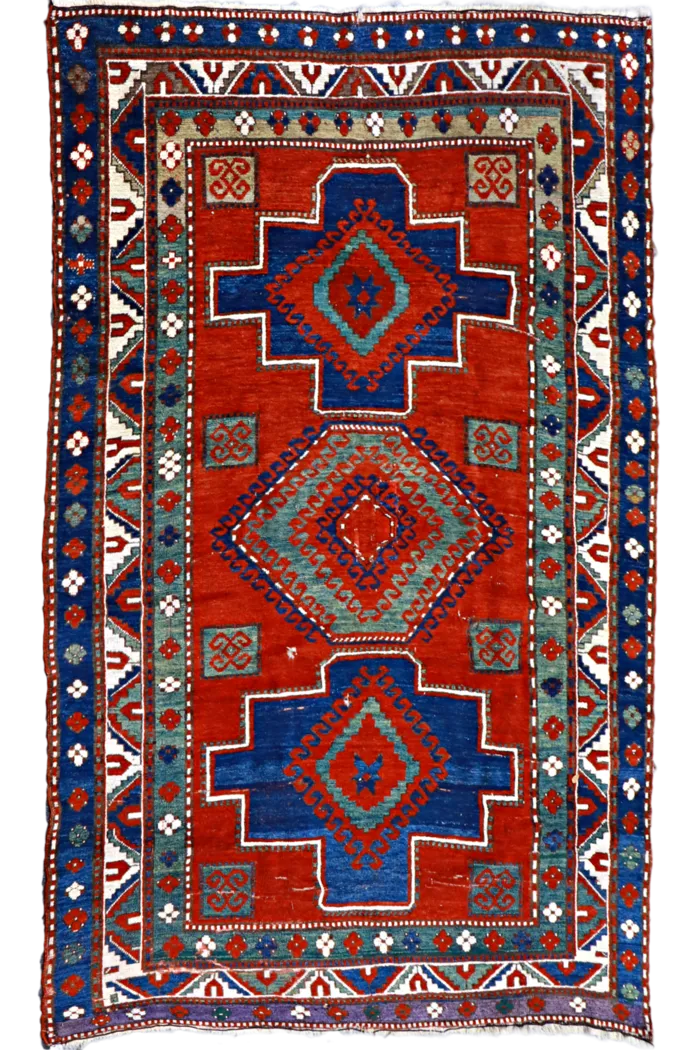
Carpet
$2,600.00
Worldwide delivery
Origin Carpets · Tbilisi
Discover our carefully curated collection of vintage and contemporary handwoven carpets from the Caucasus region. Each piece is handpicked by our experts from historic trading routes that once connected East and West.
Explore our collection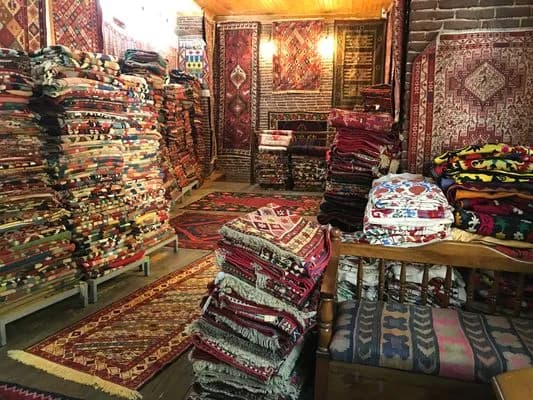
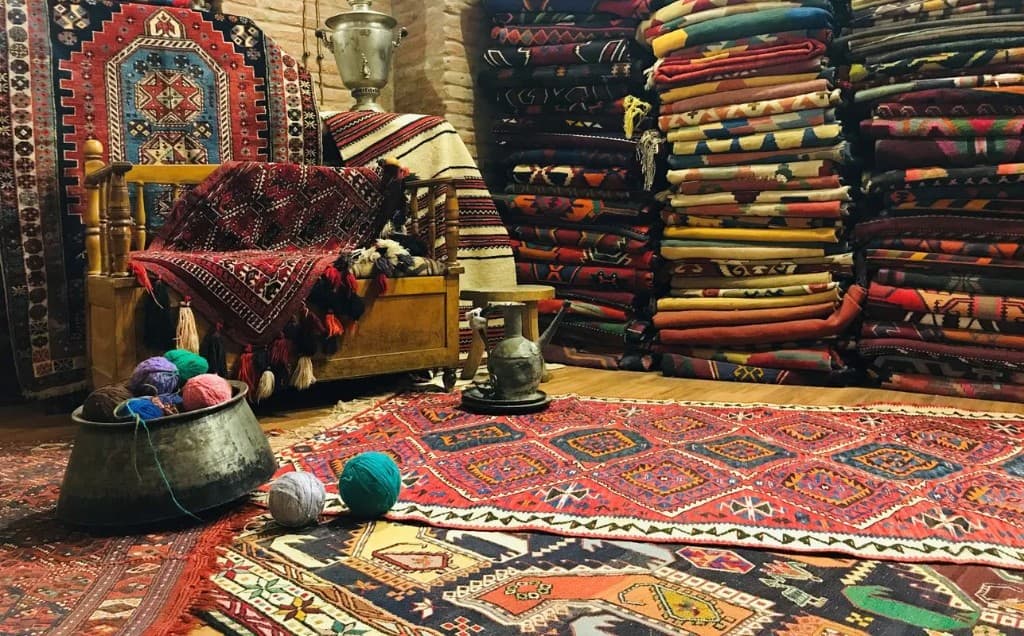
Our gallery in Tbilisi holds a diverse collection of Georgian, Persian, Turkish, and Central Asian rugs. Each piece is chosen for its craftsmanship, colour, and story.
Caucasian and oriental hand-woven carpets
Read the storyExpertise
What specialists look for: age, origin, and colour.
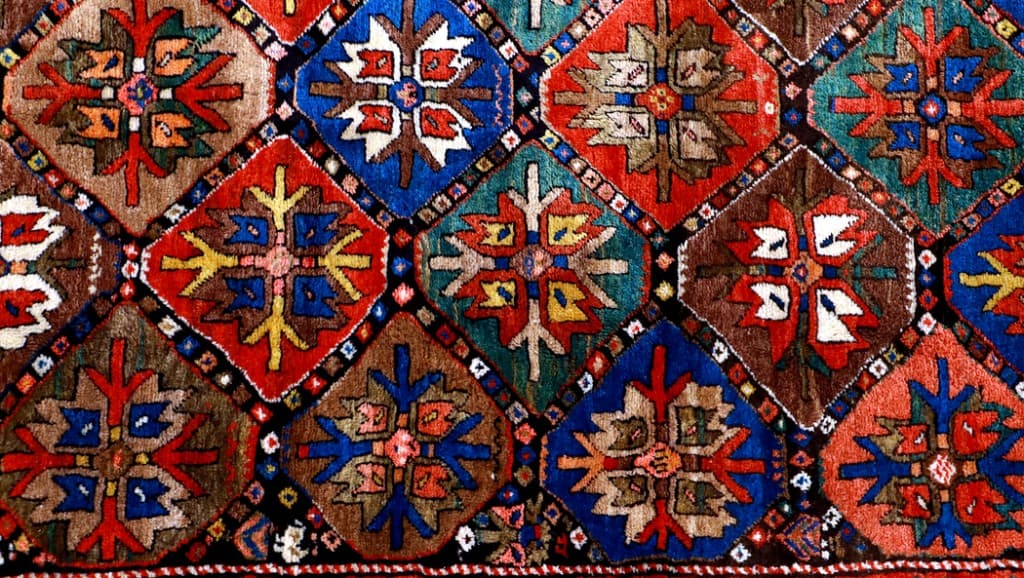
Age and origin are read from the weave, the knots, the drawing of the pattern, and how the wool has worn. Each region leaves its own handwriting on a carpet.
The film also tells the longer story — how carpet traditions travelled — and how colours were made from plants, roots, and insects before chemical dyes existed.
About us
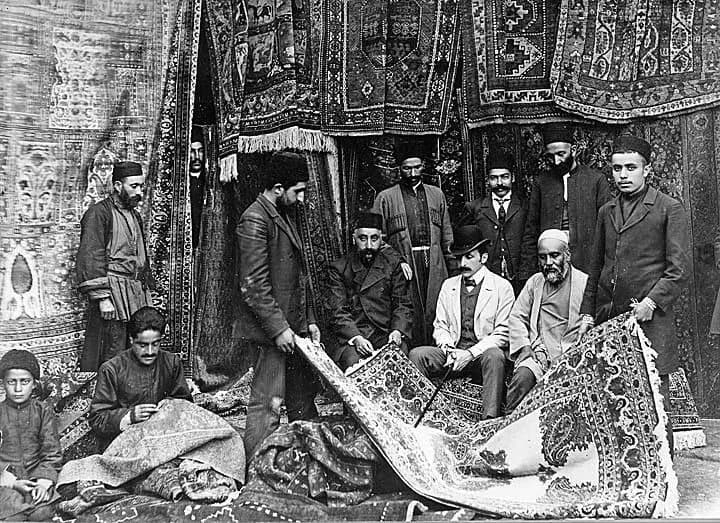
Our gallery opened in 1995. It is in the historic district of the city where, in the 18th and 19th centuries, camel caravans laden with carpets used to stop on their journeys from Asia towards the Black Sea. One room of our gallery was once used for camel stabling. The second was a tavern shop, where traders sat on mats and bought and sold carpets. The mood has been preserved: the three hundred year-old building walls of the caravans-saray are still a place for people of different nationalities to meet and deal in carpets.
Located at the crossroads of Eurasia, Tbilisi is on the Great Silk Road and has always been considered a hub of trade and education. It is to Tbilisi where all sorts of carpets and rugs were imported from Asia, as well as other precious things. As well as trading, Georgia made quality bags, carpets and rugs. In particular, Tusheti, Kakheti, Alwan and Akhaltsikhe were famous for precious high-quality products, skilled weavers, and the quality of local sheep and wool.
Our gallery collection includes both old and new Georgian, Dagestani, Armenian, Azeri, Persian, Turkish and Central Asian rugs and carpets.
Carpet Technologies
Weaving technology of carpet is very popular. Carpet is woven on a special loom. First weave the base (made of wool, cotton or silk) and then start weaving the ornaments with wool or silk thread. Typical carpet weaving is when knitting a knot with a thread and then cutting; the pile originates from here. There are carpets which are wool on wool, wool on cotton or silk on silk. Quality of the carpet depends on density of weaving, natural vegetable colors and quality of threads.
Kilim, compared to carpets, is a thinner flatweave without pile. First they weave the base and then they start making ornaments by knots. Unlike carpets, weavers do not cut knots. In kilims there are natural vegetable dyes and also insects used to dye, for example dirty pink. This is popular Koshineli.
Djidjim (jejim) is a flatweave technique where coloured supplementary wefts float across the surface to form an embroidery-like pattern over the ground weave. Lighter than a pile carpet, it is prized for graphic ornament and soft textile character.
Suzani is a traditional Central Asian embroidered textile — floral and medallion motifs worked by hand onto cloth. Often used as wall hangings, covers, or decorative pieces rather than heavy floor rugs.
Soumak is woven by wrapping coloured wefts around the warp, creating a flat but textured, corded surface — denser and more dimensional than a kilim, without a cut pile.
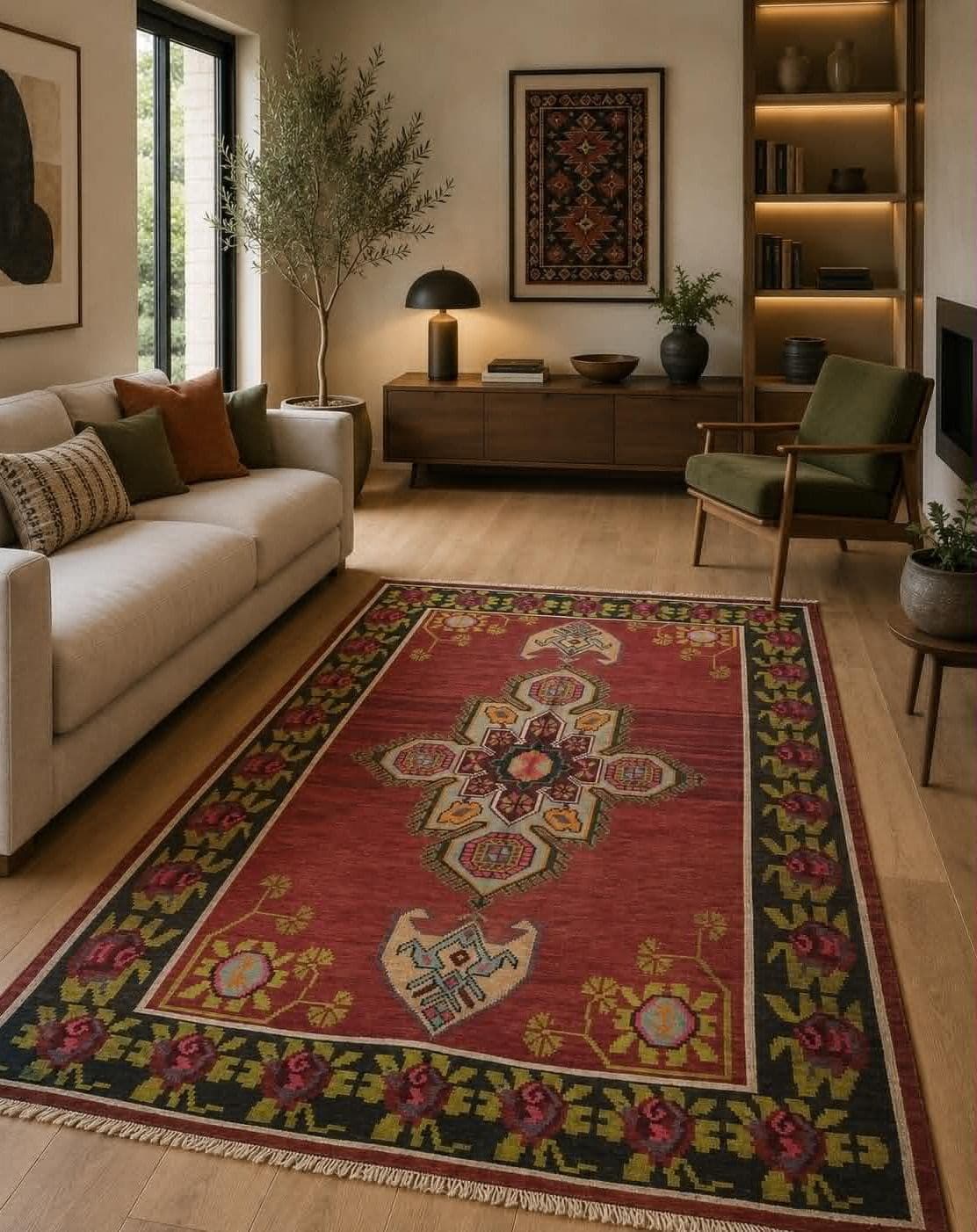
Origin carpets styled in living rooms, bedrooms, and outdoor spaces — colour and craft in everyday life.
Contact Us


